Showing posts sorted by relevance for query givhan. Sort by date Show all posts

Thursday, February 11, 2010

Katie Couric in Harper's Bazaar


I have finally returned from a far-too-long hiatus centered around a trip to Southeast Asia and the subsequent readjustment to normal life, which itself was interrupted by unprecedented snowstorms that have shut down the entire Washington area! Now, however, I'm back, and while my first intention is to write a post on the fabulous textiles I encountered in SE Asia, I've decided to begin instead with a brief post on an article by The Washington Post's Robin Givhan. The article focuses on a story in this month's Harper's Bazaar about CBS anchor (and UVa alumna, I might add) Katie Couric.

I have covered Givhan's reporting in the past (see these posts), and generally admire her writing and obersvation, although I feel that her lack of a fashion studies background is a handicap to her full understanding of some of the topics she covered. The article on Couric centers not on the text of the Bazaar article but on its photography, by François Dischinger. Givhan writes, "(The photos) are an audacious celebration of a powerful woman as a boldly sexy one, too.

There's nothing reserved or hesitant in the sex appeal on display in the four-page story about Couric. The images are a full-throated, even exaggerated, rebuke of the notion that a woman must dress in a prescribed manner -- Suze Orman suits, full-coverage blouses, sensible heels -- to protect her IQ, her résumé and her place in a male-dominated work culture.

Is Couric dressed in a manner appropriate for a network anchor? These images demand that viewers define -- or redefine -- their terms."

There are two main images of Couric that accompany the article (at least in the online coverage): one depicts her in a beige, one-shouldered, above-knee-length Calvin Klein collection dress sitting at a glass desk in a modernist white office, and the other shows her in a short, dark skirt and blazer by Giorgio Armani, black hose, and a pair of Louboutin booties. She clutches the blazer closed at her chest and no shirt is visible underneath. In this second picture, Couric stands boldly atop two TV sets, one showing her (in?)famous interview with Sarah Palin and one showing her interviewing President Obama.

It's obvious that the photographer wanted to convey confidence, power, and yes, sex appeal. Couric is, after all, the first woman to anchor the evening news solo on one of the "big three" broadcast networks. While the article seems to emphasize her interviewing prowess, she is portayed as the anti-Barbara Walters: young, modern, in-charge -- and sexy.

In fact, it seems as though leaving sex appeal out of the picture would diminish her powerful image. In our culture, sex appeal has become an essential part of a woman's strength; asexuality, dowdiness, or even the downplay of one's assets for the sake of propriety smacks of a lack of confidence and creates the sense that a woman is not at home with her femininity. This is not a particularly new idea, especially since Sex and the City brought almost-nymphomaniacally sexually aware third-wave/post-third-wave feminism to the forefront of popular culture.


Givhan takes this sex-appeal-as-power in a different direction, as well, recognizing the difficulties of maintaining this kind of fashionable image (particularly when it comes to shoes):
How can she walk in those? Pure grit-- that's the explanation. And yes, please infer that if those four-inch stilettos don't draw tears from the woman wearing them, then neither will some ambitious colleague's backstabbing ways. Fashion, in this sense, is power.

There is, of course, the depth of the phallic symbolism of high heels to be plumbed here as well, but plenty of articles have already been written on that subject. And, to be honest, I don't think that would be particularly pertinent in an examination of Katie Couric.

As Bazaar fashion/special projects director Laura Borwn phrases it, "When coming up in the industry, you tend to dress the way people think you should dress. (Couric) has earned the right to be sexy if she wants." In these photos, Couric is indeed participating in the dissemination of this idea. Yet Brown adds that, after all, Couric was "doing photos for a fashion magazine, not Newsweek." I think that any analysis of Couric in these photos, and not just the photos themselves, must acknowledge that Couric's participation here was mostly as a fashion model. These are not news photos, nor are they strictly fashion journalism; they are that frequently seen combination of portrait and fashion shoot that combines chosen aspects of a person's personality and appearance with other desirable attributes to create a celebrity image.

Givhan states, "Certainly, some will see the pictures as further proof of why she is all wrong for the job. They will probably be the same people for whom Couric has accumulated a personal work wardrobe of blacks, grays and pinstripes -- a more sophisticated, yet still reserved, alternative to the news-anchor cliché of Crayola-colored blazers." These people, and perhaps Givhan as well, would do better to analyze Couric's personality, and personal image, through the clothing she wears on and off the job in public life. Those "blacks, grays and pinstripes" are far more telling about the real Couric, and her personal idea of what it means to be a powerful woman, than the outfits in which she was dressed by the Bazaar staff. How does sexuality play into this? Only a good look at Couric's wardrobe choices, which deserves more thought that I can give it here, would tell.

What do you think? How do you perceive Couric? How do you think our culture interprets sexuality and its relationship to feminine power?

Photo of Couric by Sylvain Gaboury for Life, 09 Mar 2000.

Thursday, March 19, 2009

Givhan cites an Alexander McQueen retrospective in her essay, mentioning his design talent and tailoring skills as well as many of the "misogynistic" elements of his designs. She writes, "There were many things recycled on his runway Tuesday night that one hoped never to see again: metal neck braces, metal "yashmak" or head coverings, hobbling skirts and ankle-breaking platform shoes. One doesn't have to be a graduate of a women's studies program to find these things disturbing." True. But you don't see Obama or Ditto wearing Alexander McQueen! He appeals to a different type of style icon, a punkier one who cares less about comfort and women's rights. So different types of fashions drive, and are driven by, different types of icons.

Later, Givhan writes, "But one can't put the full burden for this kind of fashion on designers. They create it because women respond. Women will do a lot of things to themselves in the name of fashion, including giving up their power, dignity and comfort." Fashion doesn't care about power, dignity and comfort, unless those things are "in vogue." The exciting thing about Obama and Ditto is that they are taking fashion and imbuing it with their power and dignity (and perhaps comfort), making those things more fashionable. That is a positive direction after many years of style icons like Paris Hilton whose priorities are pretty much antithetical to those of these women.


One last thing about the article- Givhan doesn't write about how fashion depends on money. The everyday woman is not targeted by the fashion industry not only because fashion isn't "everyday," but because the everyday woman can't afford to partake in fashion. While many women of modest means participate in fashion through creativity and personal style, the fashion industry is driven forward by designers, and designers produce expensive clothes. You don't have to be attractive to buy haute couture or high-end ready-to-wear, you simply have to have the disposable income to spend on designer clothing. Obama and Ditto do; I, for one, do not.

The beauty of it all is that fashion trickles both up and down, from icon to designer and designer to icon, from industry to the street and from the street to industry. So while I am excited at the prospect of women's power and confidence coming into fashion through icons like Obama and Ditto, and I hope to see designers that celebrate and flatter the female form gaining prominence, I don't think that fashion is ever going to be for "the anonymous face in the crowd," as Givhan writes. That is simply not what fashion is.

This anonymous face is going to continue to participate in fashion to the extent that she can, and wants to- seeking to inspire and to be inspired.


Photo of Michon Schur fashion show in 2007 by Peter Duhon, NYC.

It Girls, the Fashion Industry, and Powerful Women

The Washington Post featured a thought-provoking article by Robin Givhan, called "Fashion Loves an It Girl, but Still Doesn't Get It." The premise of the article is that while recently, the fashion industry has embraced a broad range of nontraditional style icons (Michelle Obama, singer Beth Ditto), it still refuses to produce wearable clothing for the average woman.

She mentions that today's fashion "it girls" are symbols of "power and fearlessness," women who are unafraid to show their strong personalities to the public and the media. Because Obama is 45 and African-American and Ditto is a plus-size lesbian, Givhan writes that by choosing them as icons, "The fashion industry surprised the naysayers who did not believe it had the capacity -- even when it would be to the industry's financial benefit -- to look beyond its often narrow definition of style, beauty and glamour."

One issue with this statement is that fashion doesn't one-sidedly choose its icons. To be a fashion icon, you have to be invested in fashion to begin with. Obama and Ditto would not be "it girls" if they wore Coldwater Creek (not to bash it, but not the height of fashion)- they have both consciously chosen to invest in up-and-coming designers and take risks in their attire. The fashion industry has returned the favor because they see powerful, nontraditional women who are bringing design to the public eye. While fashion icons are often women with the ideal body type of their time (and this is where Ditto and Obama are nontraditional), those that have really driven fashion throughout history are the ones at the forefront, patronizing designers that make new and fearless choices.

Givhan goes on to write. "...even as the fashion industry honors individual self-awareness and chutzpah, it continues to chip away at the dignity of women as a whole with each model that it sends down a runway. It's difficult to reconcile fashion's slobbering affection for an individual woman who is in the public eye with what they are willing to dole out to women as a group."
Here we have to remember that fashion does not encompass every piece of attire on the market. Fashion itself doesn't really deal with "women as a group"- the phenomenon of fashion (see post on the Brooklyn museum for a definition) has historically been limited to the upper classes, those with enough money to invest in frequently-changing styles and no need to wear clothes that are convenient or comfortable enough to work in. Fashions are not necessarily meant to work for the masses- they are supposed to be noticeable, and above all, new.

That being said, many great designers in the past have respected and celebrated the female form and have made clothes that were both novel and wearable. Chanel's clothes were comfortable and easy to move in, skimming the lines of the body (see this great example). Balenciaga used his mastery of construction to move away from the restrictive shapes of Dior and towards a new silhouette where clothes floated over the body in a graceful and flattering way (see here).

To be continued!

Photo by Petty Officer 1st Class Mark O'Donald, USN

Monday, May 10, 2010

Review: American Woman at the Met


The Met now has a great feature where you can access the collections database records (including images) for all the pieces shown in the exhibition from their website, here (the second link). While it's out of order, it's a good virtual visit to the show!

This weekend's museum visits were very fruitful! We went to American Woman first thing, so we were not swamped by other visitors (although the Picasso exhibit was packed to the gills). Overall, I was very happy with the show. It was extremely different from The Model as Muse in many ways. Model as Muse was a highly academic show, with a lot of text and a lot of garments. I really felt that it contributed to the scholarship of the field-- read my full review here. American Woman at least seemed to be a much smaller exhibit, with fewer garments overall, and much, much less text. Outside of an introductory didactic and an approximately 200-word didactic for each room, there was no instructional text, just "tombstone" labels for each garment. Any additional information was included in the audio guide, which I got just to see how it was. Thankfully, Sarah Jessica Parker's narration was not distracting-- it just sounded like she was reading an audiobook. I'm assuming curator Andrew Bolton wrote the audio guide text, but I didn't see any credits for its author anywhere. The audio guide was pretty nice-- not particularly deep, but offering additional insights and notes on the pieces, and drawing particular attention to certain objects. I wasn't left wondering about the objects, and it was obvious how they all fit into the particular archetype demonstrated in each room (as a reminder, the archetypes were The Heiress, The Gibson Girl, The Bohemian, The Suffragist, The Patriot, The Flapper, and The Screen Siren).

I did want to know more about some of the accessories, including shoes and hats, most of which were not identified. It's possible that they came from the museum's prop collection, of antique but not particularly valuable pieces that are used for display purposes but not accessioned into the permanent collection. Something that totally stymied me was the presence of at least three Fortuny pleated "Delphos" dresses in the Bohemian section that were entirely ignored by the text. They were worn underneath wrappers, by Liberty of London for the most part, which were credited in the labels. The Fortuny tea gown/evening dress, both historicizing and strikingly modern and meant to be worn over an uncorseted body in a time when corsets were generally worn by all proper ladies, would have fit perfectly into the discussion of The Bohemian. It's possible that the Fortunys shown were reproductions, but I doubt that, considering that the Met has at least ten Delphos dresses and that the luminosity and uniqueness of the gowns' colors were characteristic of true Fortuny pieces. My only other guess is that the Fortuny gowns were from the Met's own collection, and as they wanted to feature only pieces that had come from the Brooklyn collection, they didn't mention them. I'm stumped!

The set design (by Nathan Crowley, a Hollywood Production Designer for films such as The Dark Knight) was unbelievable. Each room was painted in an appropriate backdrop for the archetype (for instance, the Heiress section had curved walls-- like most of the rooms-- and was painted to look like Mrs. Astor's ballroom in Newport). As in Model as Muse, some of the sets incorporated pieces from the Met's Decorative Arts collection, such as chairs and chandeliers. I think this is a great idea and assists both in appreciating the garments somewhat in situ and getting a chance to view pieces that might otherwise be stuck in storage. It is a real treat that they have the resources to create such elaborate sets! My only complaint with each room was that the lighting made it very difficult to see some aspects of the costumes. I'm not talking about the overall light levels; although they were low, that is necessary to preserve the pieces. It's that the lighting was spotty, with patches of dark and light, so that there was a subtle mottling to the illumination. This made it hard for me to discern details on some pieces-- although it may have been intentional, as low lighting hides a multitude of problems in damaged or fading garments!

I felt that the sections on The Suffragist and The Patriot, put together in one room, were sadly lacking. The Suffragist section featured about three or four suits from the teens, accessorized with a suffragette banner and some sashes-- not much of a sartorial statement. The Patriot section featured only two ensembles, both of them uniforms. These are interesting pieces and great early examples of women's military service-- but even combined with the Suffragist suits and the large screens showing contemporary video footage, I didn't feel that they really filled their own section. I also don't feel as though these are particularly strong American female archetypes (and I feel somewhat the same way about The Bohemian), although I understand that their depiction of strong, independent working women fits in well with the overarching ideas of American female identity that Bolton is getting at.

The Flapper, and her taboo-breaking sexual and behavioral freedom, is perhaps the best known of the archetypes and certainly had the fullest exhibit room. There were a couple of nice day ensembles, highlighted as appropriate for the career woman (read: working class person) that the Flapper typically was, although I didn't really think they were appropriate work clothes-- more like sportswear. The evening dresses were stunning. This was one room in which Julien d'Ys' hair dressings were NOT distracting-- in others, they were very irritating, particularly in The Heiress and The Gibson Girl, where the pompadours were multiple feet high and wide. I understand wanting to stylize, but I felt that in many cases it took away from the display of the objects.

The exhibit ended with The Screen Siren, which featured some video footage and a number of slinky '30s gowns. I was expecting to see more American designs in this section-- Adrian, perhaps, or some more American film designers. There was a notable piece by Travis Banton, but it was a film costume, and while striking, I wasn't certain it really fit in since it wasn't really "fashion." The other thing that irked me about this section was something that I saw in a few other places in the exhibit: less-than-stellar mannequin dressing. Many of the mannequins were dressed extremely well, but a few caught my eye in a bad way-- a Worth gown or two from The Heiress didn't have smooth, filled-out torsos, and there was a cluster of James gowns in The Screen Siren that made me shudder. James gowns are particularly difficult to dress because they are so sculptural. These gowns were not the most architectural of his pieces-- they were examples of the "Sirene" gown (aka the shrimp dress, see here)-- but they are still meant to fit exceptionally well and, as they are all custom-made, require appropriate mannequin modifications to look right. These appeared as though they had just been placed on the mannequins, which I'm sure is not true, but they were ill-fitting and gapped in a number of places, and I thought it made it difficult to really appreciate their intended look. Perhaps I am biased because FIT has custom mounts for all their James gowns-- but I think that is really the appropriate way to display them. See the difference here.

There is one more point I want to mention. I will not go into detail about Robin Givhan's review of this exhibit, a) because this post is already epic and b) because I don't want my blog to turn into a collection of reviews of Robin Givhan articles, BUT in her review (here), she says, "...based on this exhibition, the beauty ideal has always been slender. Those athletic Gibson Girls were practically waifs. The Flappers -- at least the ones who naturally fit the clothes and did not have to bind their bosoms so they would be fashionably flat -- were small-boned and almost fragile. Even the Screen Sirens, celebrated for their womanly curves, are tiny compared to a contemporary actress.... In our upset with the present, we have re-imagined a past of buxom beauties that mostly did not exist."

She is both right and wrong. While the ideal body of the American female archetypes discussed in the exhibit has frequently been fit and athletic, it is not true that "buxom beauties" were never actual ideal body tpes of the past. The Heiress, while fragile, was probably able to be heavier than today's models thanks to the aid of her corset. The Gibson girl was seen as tall and healthy, if still svelte. The Bohemian, Suffragist and Patriot had some more room to fit in their dresses-- they were ideally busty and shaped like an inverse teardrop, wearing empire-waisted dresses and peg-top skirts. Flappers were boyish and frequently thin, although the emphasis was on a lack of definition of curves and not necessarily on waifishness. The Screen Siren ideal is perhaps the most difficult to fit-- tall and thin but just curvy enough to make a bias-cut dress interesting. The thing is, the pin-up girl of the 40s was certainly voluptuous-- and what about Marilyn Monroe? "Buxom beauties" existed-- just outside of the 1890-1940 time frame.

That aside, Givhan's point is that the ideal bodies seen in the exhibit were no fairer to the everyday woman than is the oft-discussed stick-thin ideal of today. That is true. Fashion isn't fair-- fashion just likes novelty. Ideal bodies will come and go, but if they get any healthier it will not be because fashion has decided that that's the best thing for everybody-- it will be because we're bored.

The final room in the exhibit was an oval with video and still photo projections of well-known "American women," from Katharine Hepburn to Michelle Obama. There was a particularly fabulous juxtaposition of Josephine Baker in her banana skirt with Beyoncé in her "Single Ladies" video. I felt it helped challenge the visitor to think about the characteristics of today's American woman. It also fit well with the concluding didactic, which emphasized that while these archetypes never represented a majority of real women at any point, they all combine to help name the characteristics we associate with American womanhood: vitality, boldness, and sexual, social, and artistic freedom. While I am not sure that this was a significant contribution to research in the field, it was a digestible exhibit that will teach its visitors some interesting social and fashion history and perhaps leave them with the sense it left me-- that American women are, above all, independent.

What did you think of the exhibit? What were your favorite pieces? What thoughts did you depart with?

Photo: Actresses Marlene Dietrich and Anna May Wong w. filmmaker Leni Riefenstahl at Pierre Ball, Berlin, Alfred Eisenstaedt, Life, 1928.

Tuesday, November 3, 2009

Power Jeans, Isabel Toledo, and Christian Louboutin


Today's post is a potpourri of sorts, covering a few items of interest that have come up in the last week or so. First, some current events: on Thursday night (11/5), the Textile Museum will host a program sponsored by the Swiss Embassy called "From Switzerland to the White House: The Story Behind the Inauguration Dress." The event will focus on the creation of Isabel Toledo's Lemongrass Coat and Dress, worn by Michelle Obama to her husband's inauguration, following the garment from the fabric stage through the finished product. Toledo, her husband and noted illustrator Ruben Toledo, and the creative director of the Swiss company that produced the fabric will participate in a panel discussion moderated by the Washington Post's Pulitzer Prize-winning fashion journalist Robin Givhan. The event is $25 for TTM members and $45 for non-members and will be followed by a reception with Swiss wine and chocolate (yum!). For more information, check the TTM website here (scroll down to Nov. 5 for the phone number). If I were not already speaking at a conference in Boston on Thursday, you can bet I 'd be there in a heartbeat. I think it will be a great opportunity to hear not only about Toledo's creative process but to think about the designers and creators of the fabric of high-fashion garments, something that is frequently overlooked.

Speaking of Robin Givhan, who is an excellent writer and astute observer (but who does not originally come from a fashion studies background), the Post's Style section recently featured
a short piece by her on Christian Louboutin's first visit to DC. I was intrigued by the fact that he had avoided coming to DC during the Bush administration because he greatly disliked the president-- I'm not surprised, but I do feel as though he ought to recognize that the entire city and its environs aren't governmentally owned (just most of it)! In addition, some of the Marymount students I teach were involved in his shoe-signing event at Neiman Marcus, something he loves to do and an opportunity for fans to witness his very charming (and oh-so-French) personality.

Finally, to some commentary. The Wall Street Journal recently featured a short article by Christina Binkley called "The Relentless Rise of Power Jeans." It focuses on how, in Binkley's words, "jeans are now a legitimate part of the global power-dress lexicon, worn to influential confabs where the wearers want to signal they're serious--but not fussy--and innovative." She then goes on to describe situations in which "power jeans" are successful in sending an appropriate signal, and they ways in which they must be carefully chosen and appropriately accessorized. The article does an excellent job of recognizing the power of "authoritative casual" dressing. In the right instances, a less-formal garment while remaining neat and businesslike instantly sets the tone that you are the one in charge, setting the dress code; you don't need to put on a suit to be powerful. For a man to wear power jeans among his dress-panted peers gives the appearance that he is the most relaxed one of the bunch, that he was confident in the propriety of his clothing and that the others fell to business casual because they weren't sure what the rules were.

In addition, it's a lot harder to get power jeans right than dress pants. Business casual has superseded the suit as most men's everyday workwear, so the oxford shirt/dress pants/matching belt and shoes combo is a no brainer for most guys. Power jeans, however, require more nuance-- they're not just your faded weekend jeans with a slouchy fit. Not only do they need to be dark and well-tailored, they need to have just the right shirt, belt, shoes, and perhaps sport jacket to accompany them. As Binkley says, "getting power jeans right involves lots of no's." So by wearing power jeans successfully, one not only demonstrates that they are at ease and in command of a situation but that they have good taste and well-developed sartorial skills.

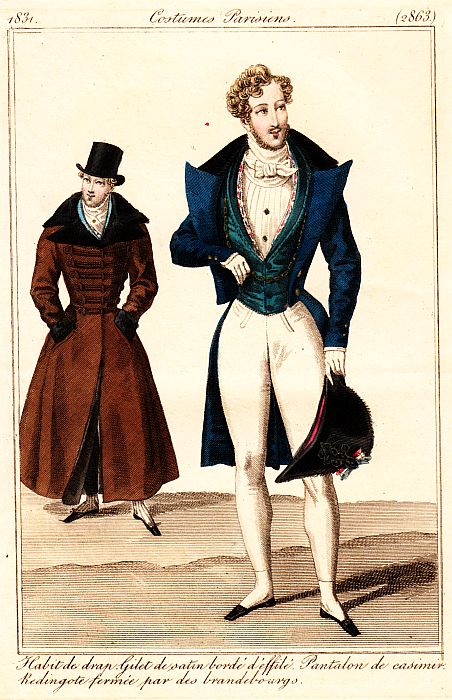
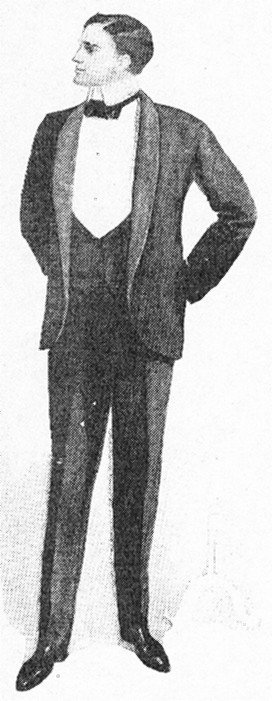
One last thing to note is the menswear's gradual march from casual to formal, which has been progressing since the early 19th century. Around 1820, men wore a frock coat (with a "skirt" down to the knees on all sides) for informal daytime events, and a tailcoat for formal daytime and evening events. By the 1860s, the sack coat (effectively our modern suit jacket) had been introduced for very casual daytime wear and the frock coat had been relegated to formal daytime status, while the tailcoat was worn only in the evenings. By the 1880s, the sack coat remained informal, while the morning coat or cutaway was accepted as semi-formal daytime attire and the frock coat was worn only for the most formal daytime occasions. Tailcoats were still worn for evenings. By the turn of the 20th century, tuxedos were added to the mix as a less-formal evening alternative (a dressy form of the sack jacket). By the 20s, American men wore sack-jacket suits for virtually everything and tuxedos or tailcoats for evenings. In this image of King George V in 1927, notice that the man at the far left wears a sack coat, the man greeting the King wears a morning coat, and the King and his friend wear frock coats (extremely stodgy and outdated at this point).

As we are now, virtually no one (but the Brits at Ascot) wears a morning suit (which is a shame, because they're very nice-looking). Only conductors wear white tie and tailcoats. We now no longer wear suits for work. So the power jeans begin to work their way into the rotation. Who knows-- we may be wearing them to gala events in 50 years!

What do you think? How do you feel about the use of power jeans? Do they work in your field, or not? Do you think they'll eventually become the new suit? Would that be good or bad (or simply fashion)?

Photo by Michael Rougier for Life, March 1955.
 
Creative Commons License
This work by W. Robertson is licensed under a Creative Commons Attribution-Noncommercial-Share Alike 3.0 United States License.